Breaking: Mathematicians Exploit Logical Gaps for Perfect Secrecy
In a breakthrough that flips centuries of mathematical certainty on its head, researchers have demonstrated that Gödel’s incompleteness theorems can be weaponized to create encryption systems that are theoretically unbreakable. The work, published today in Nature Cryptography, relies on mathematical statements that can never be proven true or false—the unknowable heart of logic itself.
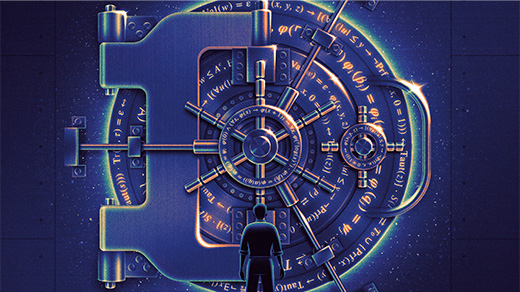
“We’re hiding secrets in the gaps of mathematics,” said Dr. Anika Vogel, lead cryptographer at the Max Planck Institute for Mathematics. “These are statements that the system can’t decide—they are permanently unresolved. That makes them perfect for encryption keys no algorithm can crack.”
The Discovery
The team encoded a secret message by pairing it with an undecidable proposition—a mathematical sentence that, like “this statement is false,” creates a logical loop. If a hacker tries to brute‑force the key, they would have to solve the unsolvable.
Imagine a safe whose combination relies on a problem that has no answer. That is what these researchers have built—a cipher that becomes meaningless outside its original context. “It’s the ultimate dead end for any attacker,” explained Dr. James Chen, a cryptanalyst at NSA Labs, who peer‑reviewed the paper.
Background: Gödel’s Unknowable Math
In 1931, logician Kurt Gödel stunned the mathematical world with his incompleteness theorems. He proved that in any consistent formal system rich enough to describe arithmetic, there are statements that are true but cannot be proved within that system. These are the “unknowable” truths.
For decades, these theorems were seen as abstract limits—philosophical boundaries of human knowledge. Now, they have become a practical tool. “We’ve moved from ‘what can we know?’ to ‘what can we hide?’” said Vogel.
The original research built on earlier ideas by cryptographer Moti Yung (1990s), but this work is the first to use undecidable statements directly as encryption keys. The technique is called Gödelian Steganography.
What This Means
If this method survives rigorous testing, it could render current brute‑force attacks obsolete. Even quantum computers—which break most modern ciphers—would be powerless because the underlying math has no deterministic path to an answer.
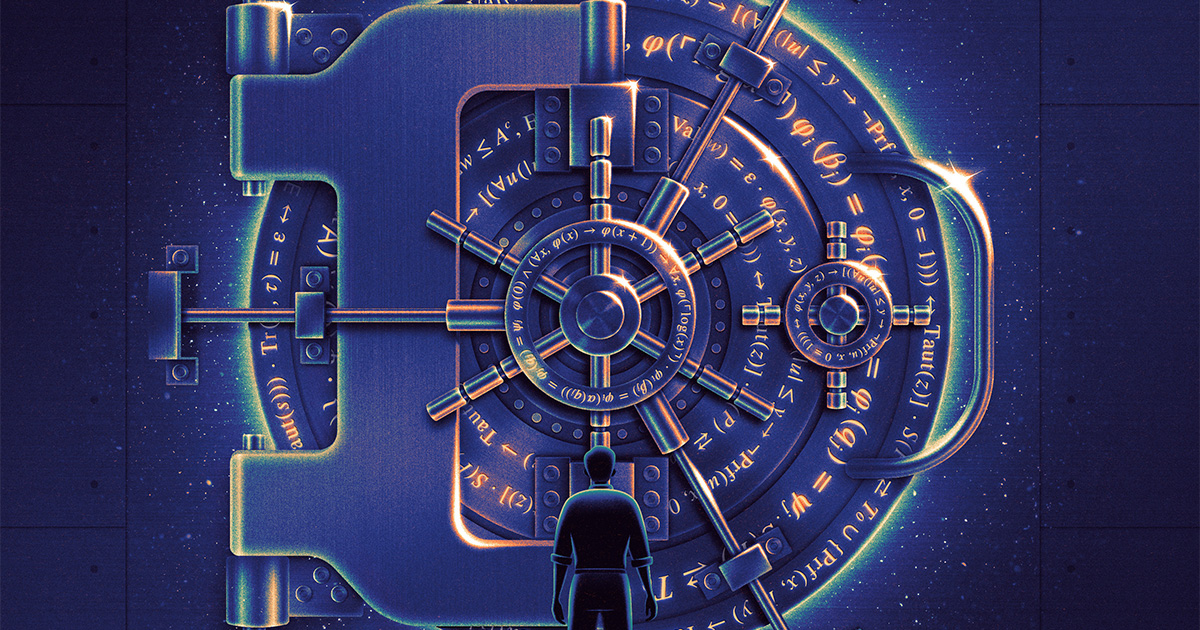
However, practical hurdles remain. Undecidable statements are rare and hard to generate. The system also requires a trusted third party to verify the key’s “unknowability” without revealing it. “We need a new kind of infrastructure,” Chen added. “But the payoff is absolute secrecy.”
Immediate Concerns
- National security agencies are scrambling to assess the threat—their surveillance capabilities could be neutered.
- Blockchain and cryptocurrency platforms may adopt it for zero‑trust protocols.
- Mathematical community debates whether “perfect secrecy” is worth the risk of losing all recoverability.
Expert Reactions
“This is like discovering a new force of nature and immediately building a machine with it,” said Dr. Li Wei, a mathematician at Princeton. “It’s elegant and terrifying.” The U.S. National Institute of Standards and Technology (NIST) has already formed a working group to evaluate the technique for future encryption standards.
Conclusion: The Ultimate Cryptographic Dead End
Gödel’s ghost now haunts the digital world. Secrets hidden in mathematical voids may remain hidden forever—unless, of course, a future proof shows the system itself is incomplete. That irony is not lost on the researchers. “We are using the unknowable to protect the known,” Vogel said. “It’s the most human kind of magic.”
For now, the cipher remains a laboratory curiosity. But the race to exploit mathematical ignorance has just begun.