In a groundbreaking advance that bridges photochemistry and molecular engineering, scientists have unveiled a light-powered technique to construct tiny, highly strained ring structures known as housane molecules. These compact cyclic compounds, long coveted for their potential in pharmaceuticals and advanced materials, have traditionally resisted efficient synthesis due to their immense internal tension. The new method, reported in a recent study, leverages photocatalysis and precise molecular tuning to unlock a clean, high-yield reaction pathway.
The Synthesis Challenge: Harnessing Strain in Small Rings
Housane molecules belong to a family of strained-ring systems characterized by their small size and significant bond-angle distortion. This strain stores energy, making these rings highly reactive—a property that can be exploited in drug design to enhance binding affinity or create unique reaction intermediates. However, the same strain that gives them value also renders them notoriously difficult to produce: conventional chemical routes often result in unwanted side reactions, low yields, or require harsh conditions that degrade the product.
Photocatalysis: A Controlled Energy Source
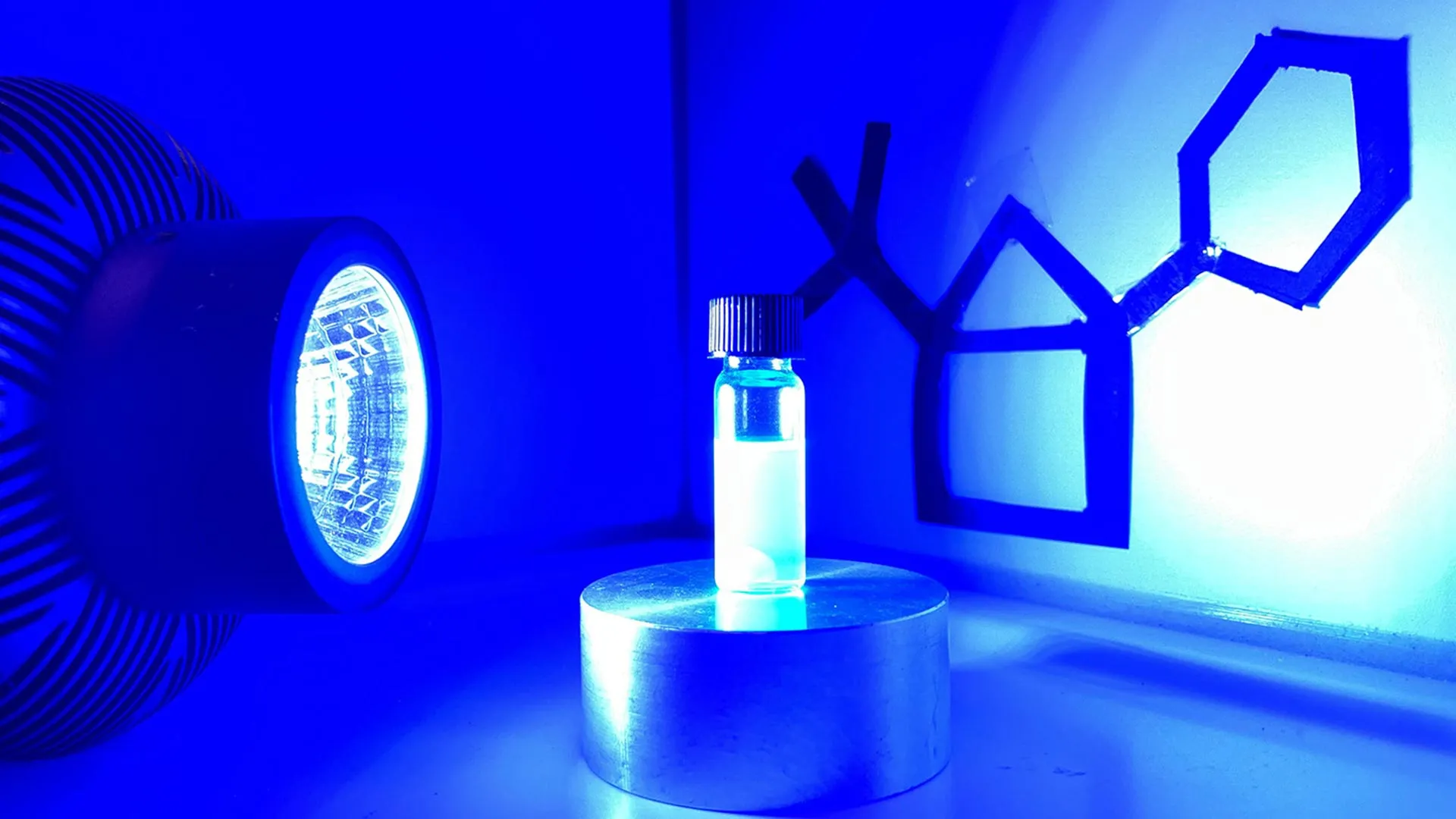
The key innovation involves using light to drive the formation of housane rings. In the process, a photocatalyst absorbs visible light and transfers energy to the starting molecules, activating them without the need for high temperatures or corrosive reagents. This gentle, targeted activation enables the reaction to proceed efficiently while minimizing competing side reactions. The team meticulously optimized the catalyst and light wavelength to ensure the energy input matched precisely the requirements of the desired transformation.
Tuning Starting Materials for Selective Pathways
Equally critical was the careful design of the precursor molecules. By introducing specific functional groups at strategic positions, the researchers guided the reaction to follow a single, clean pathway that leads exclusively to the strained housane product. This molecular "tuning" prevents alternative rearrangements and ensures that the high-energy ring forms with high purity. The result is a synthetic route that is both scalable and reproducible—a major step toward practical applications.
Why Strained Rings Matter for Medicine and Materials
The implications of this work extend far beyond academic curiosity. In pharmaceutical development, strained rings can serve as versatile building blocks for designing drugs that interact more strongly with biological targets. The increased reactivity of housane derivatives, for instance, allows them to form stable covalent bonds with enzymes or receptors, potentially leading to more effective therapeutics with fewer side effects. Moreover, the compact shape of these rings can improve a drug’s ability to cross cell membranes or fit into narrow binding pockets.
In materials science, housane-based polymers could exhibit unusual mechanical properties, such as enhanced elasticity or stress responsiveness. The internal strain within each ring might be harnessed to create self-healing materials or pressure-sensitive adhesives. The light-driven method also offers a greener alternative to traditional synthesis, reducing the need for toxic solvents and energy-intensive processing.
Future Directions: From Lab to Pharmacy
While the current study demonstrates proof of concept, the team envisions extending the methodology to a broader family of strained rings. Further refinements in photocatalyst design could enable even more complex architectures, such as multi-ring systems or those containing heteroatoms. Collaborative efforts are already underway to evaluate housane derivatives in drug-discovery pipelines, and industrial partners are exploring scale-up strategies for material production.
Conclusion
Light-driven synthesis has opened a practical door to housane molecules, transforming a once-difficult challenge into an accessible tool. As the technique matures, it promises to accelerate innovation in both medicine and materials, delivering compounds that were previously out of reach. For a deeper understanding of the molecular tuning strategy and photocatalytic conditions, refer to the sections on photocatalysis and tuning above.